What a Quarterly Pest Control Visit Actually Covers at Your Home
Four visits a year sounds simple, so here is what the technician does, room by room and wall by wall.
October 8, 2026 · 4 min read
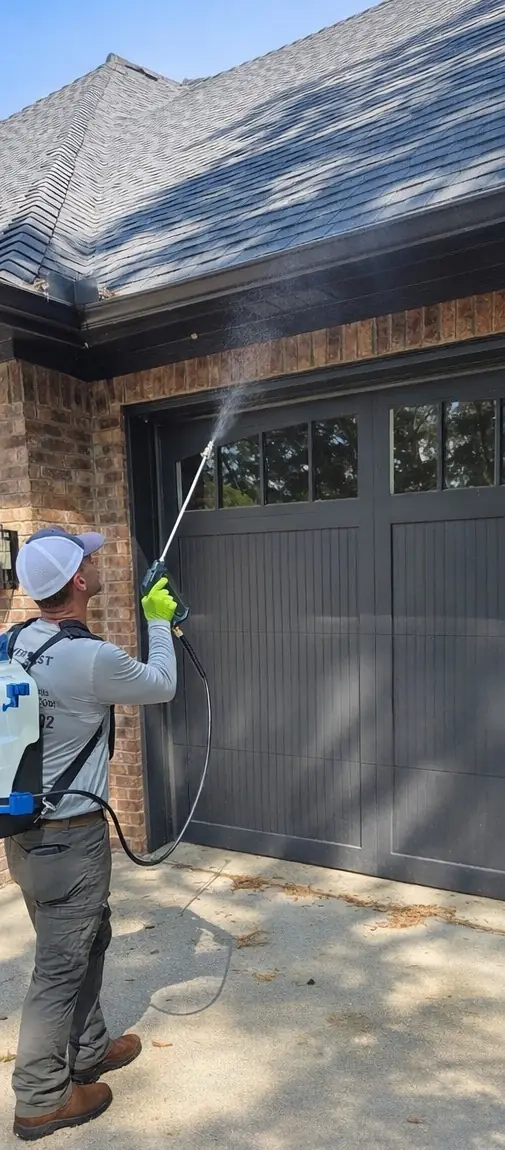
If you have never signed up for a recurring pest plan, the word quarterly can sound vague. Four visits a year, a technician with a sprayer, a quick walk around the house, and then he's gone. The reality is more specific than that, and it helps to know what you're buying before you say yes. Here is how Rivers Pest Control lays out its quarterly service, one line at a time, and what each piece means for a house in Lindale or anywhere nearby.
The outside of the house comes first
The exterior treatment is the backbone of the visit. The technician sprays the foundation, the doors, the windows and the eaves. Those are the places bugs use to get from your yard into your house: the seam where the slab meets the brick, the gap under a door, the frame of a window that hasn't been caulked in years, the corner of the eaves where wasps like to start a nest.
The goal is a barrier. Ants, spiders and roaches walking along your foundation cross treated ground before they find a way in. A single spray doesn't last forever, which is the reason the visits repeat. East Texas weather is hard on anything applied outdoors. Heat, hard rain and a weekly mowing pass all wear a treatment down, so coming back on a schedule keeps the barrier from thinning out.
Baseboards and the inside of the house
Interior protection means treating the baseboards inside. That sounds minor, but baseboards are where pests actually travel and hide. A roach doesn't cross the middle of your living room if it can run along the wall instead. Spiders and ants follow the same edges, and they tuck into corners behind furniture and under cabinets.
Their service sheet describes it as targeting pests where they hide and travel. That's a good way to think about it. The treatment goes where the pests are already moving, not out into open floor space where you and your kids and your dog spend the day. Tell the technician about any spot where you've seen activity, like the pantry corner, under the kitchen sink or behind the washer. A bug you saw last Tuesday is useful information.
Rodent monitoring is part of the plan
The third line on the sheet is rodent control. Rivers Pest Control says it helps monitor and control rodent activity so unwanted guests stay out of your home. Mice and rats aren't a seasonal problem the way ants are. Cooler weather sends them looking for shelter, but they also come in because there's a gap, a food source or a warm attic, and that can happen in any month.
Having rodents on the quarterly checklist means someone is looking for the early signs on a regular basis, instead of you finding out when you hear scratching at two in the morning. The early signs are small: droppings along a baseboard, a gnawed corner on a bag of pet food, a greasy smudge along a wall where a mouse runs the same path every night. Catching those early is a lot easier than dealing with a full infestation.
Advice you can use between visits
The fourth line is expert advice. The technician identifies conducive areas around your property, meaning the spots that attract pests, and gives recommendations to help prevent future issues. Conducive is trade language for anything that makes your yard friendlier to bugs than it needs to be. Common examples around East Texas homes:
- Mulch piled against the slab, which holds moisture and gives ants and roaches a damp place to settle.
- Firewood stacked against the house or under the eaves.
- A dripping hose bib or a leaking AC drain line that gives pests water during a dry spell.
- Shrubs and branches touching the siding or the roof, which work like bridges.
- Pet food or bird feeders left out overnight.
None of those fixes cost much. A shovel, ten minutes with a wrench on a hose bib, and moving the woodpile away from the wall will do more than most people expect. A spray can only do so much if the yard keeps inviting the bugs back.
If the pests come back, so do they
The last line is warranty service, and it's the one customers tend to care about most. Their own wording is straightforward: if pests return between scheduled services, so do they, and retreats are included if necessary. In practice that makes a call about returning activity a normal part of the plan, not a separate purchase you have to talk yourself into.
One Google reviewer, Kelsey Shaver, described the visit this way: “They arrived on time and were very thorough.” Thorough is what you want from a visit that only happens four times a year, because each one has to do real work.
Who a quarterly plan suits
Quarterly service fits homes that deal with steady ant, spider and roach pressure, which in East Texas is most of them. Their service sheet says the plan is designed to keep your home protected year-round from most common East Texas pests. Rivers Pest Control works with both residential and commercial customers, and the truck door carries their Texas pest control license number, TPCL #0925279.
If you'd like to know what a visit would look like at your place, call or text (430) 260-7402. The office is at 407 S Main St, Suite 6, in downtown Lindale, open Monday through Saturday from 9 to 5.
Rivers Pest Control, (430) 260-7402
Call (430) 260-7402More articles
Why East Texas Heat Sends Ants and Roaches Indoors in Late Summer
When the yard dries out, your kitchen starts looking like the best water source for a quarter mile.
Fire Ant Mounds in an East Texas Yard: Why You Treat the Colony, Not the Mound
That pile of loose dirt is the visible tip of something much bigger, and poking it is the fastest way to get stung.